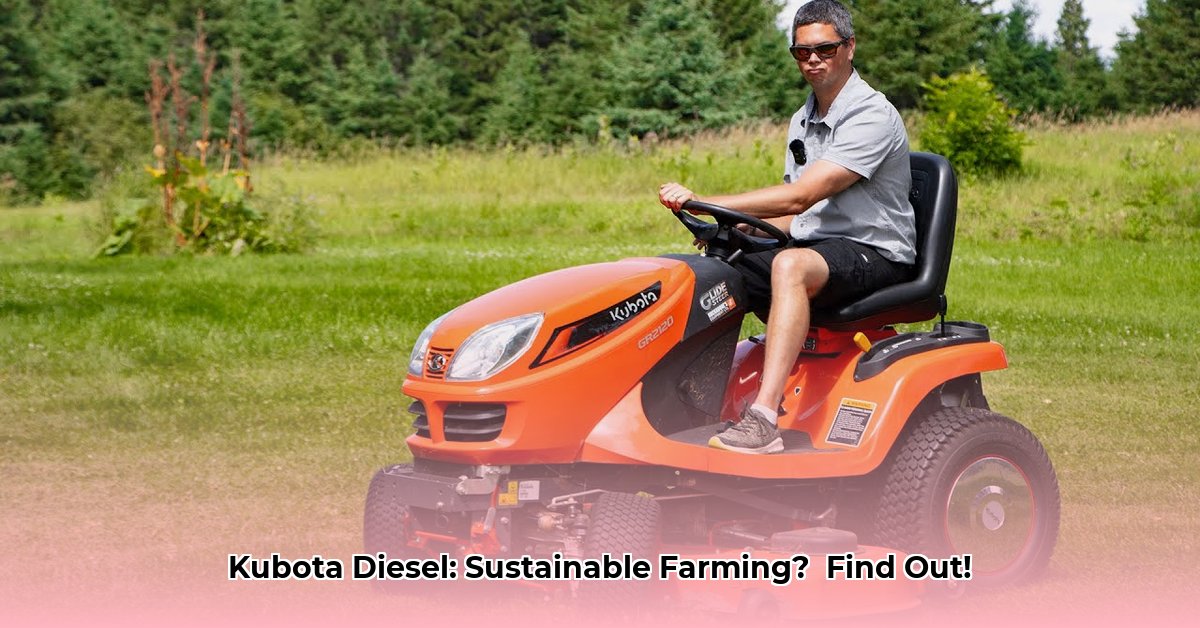
Sustainable agriculture is no longer a niche concept; it's a necessity for a healthy planet and a secure food future. Efficient food production with minimal environmental impact demands innovative farming methods, and technology plays a crucial role. This guide explores how the seemingly simple diesel Kubota lawn tractor contributes to sustainable farming practices. For more information on compact tractors, check out this helpful resource.
The Role of Precision in Small-Scale Farming
Modern farming hinges on resource optimization: minimizing waste, using resources efficiently, and lessening our environmental footprint. Precision agriculture is key to achieving this. While a Kubota diesel lawn tractor might seem small compared to large-scale farming equipment, it represents a significant shift toward targeted, less wasteful practices in smaller operations. Its size enables precise work, reducing fuel consumption and soil compaction compared to larger machinery. Furthermore, diesel engines, while not emission-free, generally outperform comparable gasoline engines in terms of emissions.
Small Tractor, Big Impact on Efficiency and the Environment
Don't underestimate the versatility of a Kubota diesel lawn tractor. Its compact size is ideal for various tasks on smaller farms, including tilling smaller plots, tending orchards, and navigating narrow vineyard rows. This precision reduces excessive fuel use and soil damage often associated with larger equipment, enabling more efficient and environmentally friendly farming.
Navigating the Challenges and Rewards of Sustainable Technology
Adopting sustainable technology presents challenges. The initial cost of a diesel Kubota lawn tractor can be substantial, especially for smaller farms with limited budgets. Adequate operator training is also crucial for efficient use and longevity. The long-term aspects—the lifespan of the tractor, ease of maintenance and repair, and responsible disposal—must also be carefully considered. Let's unpack some of the realities. How do we overcome these obstacles?
Environmental Footprint: A Holistic Perspective
While diesel engines are generally more fuel-efficient than gasoline engines, emissions remain a concern. Responsible use is paramount. Regular maintenance, minimizing idling time, and exploring alternative fuels like biodiesel are essential. The entire life cycle—from manufacturing to disposal—must be considered, accounting for the environmental impact of production, resource use, and recycling/disposal methods.
Actionable Steps: A Collaborative Approach
Maximizing the benefits of diesel Kubota lawn tractors while maintaining sustainability requires a collaborative effort. Here's how different stakeholders can contribute:
1. Farmers:
- Research and Apply for Subsidies: Explore government subsidies and grants for sustainable equipment.
- Invest in Comprehensive Training: Ensure thorough training on tractor operation and maintenance for optimal efficiency and longevity.
- Implement Fuel-Saving Techniques: Employ techniques such as maintaining proper tire pressure and minimizing idling to reduce fuel consumption.
2. Manufacturers:
- Innovate for Fuel Efficiency: Continue research and development of fuel-efficient diesel engines and alternative fuel options.
- Prioritize Sustainable Design: Design tractors with easily repairable components and recyclable materials.
- Enhance Data Security: Integrate robust data security features in integrated systems to safeguard farmers' information.
3. Policymakers:
- Invest in Sustainable Fuel Research: Fund research and development of sustainable biofuels and other alternative energy sources for agricultural machinery.
- Incentivize Green Technologies: Offer financial incentives, such as tax breaks or grants, to encourage farmers to adopt sustainable technologies.
- Establish Clear Regulations: Create clear regulations and standards for production, use, and disposal of agricultural machinery to minimize environmental impact.
4. Researchers:
- Conduct Long-Term Impact Studies: Conduct ongoing research into the long-term environmental impacts of various agricultural technologies, including diesel tractors.
- Develop Best Practices: Develop and disseminate best practices for the responsible use, maintenance, and disposal of farming equipment to reduce environmental impact.
A Balanced Perspective: The Broader Context
Sustainable farming is a multifaceted process requiring careful planning, responsible practices, and a comprehensive perspective. A diesel Kubota lawn tractor is a valuable tool, but its success depends on its integration into a larger, environmentally responsible strategy. The technology is only part of the solution; the actions of farmers, manufacturers, policymakers, and researchers are equally crucial to establish sustainable farming practices. It's an ongoing journey of adaptation and learning.
Reducing Fuel Consumption with Precision Agriculture Techniques
Optimizing fuel efficiency in small farm tractors significantly reduces both environmental impact and operating costs. Precision agriculture technologies provide powerful tools for achieving substantial fuel savings. Implementing these techniques requires a multi-pronged approach encompassing equipment, operations, and technology.
Practical Steps to Fuel Efficiency
Prioritize Regular Maintenance: A well-maintained tractor is more efficient. Regular service ensures optimal performance and minimizes fuel waste. This includes regular oil and filter changes, and properly inflated tires.
Optimize Tractor Operation: Understand your tractor's optimal operating range. Avoid lugging the engine, which increases fuel consumption and stresses components. Choose the appropriate sized tractor for each task.
Embrace Precision Technology: GPS-guided steering minimizes overlaps, reducing unneeded fuel expenditure. Variable-rate technology allows precise application of inputs, reducing waste and lowering fuel usage. Data analysis pinpoints inefficiencies for informed decision-making.
Optimize Field Operations: Consider no-till or reduced-till farming practices to minimize soil disturbance, reducing fuel consumption and benefiting soil health. These may often require less powerful tractors.
Invest in Driver Training: Well-trained operators achieve greater efficiency and reduced fuel consumption
Advanced Fuel-Saving Techniques
For maximizing fuel efficiency, explore:
- Telematics: Real-time monitoring of your tractor's performance provides crucial data for operation optimization and pinpoint inefficiencies.
- Predictive Maintenance: Data analysis helps prevent equipment failures, avoiding downtime and ensuring continued efficiency.
- Auto-Steer Integration: Auto-steer systems minimize overlap and wheel slippage, directly leading to fuel savings.
The Long-Term Vision: Sustainable Farming
Implementing these techniques is not merely about immediate fuel savings; it is an investment in the sustainable future of farming. By reducing fuel dependence, we build a more environmentally friendly and economically resilient agricultural system. A sustainable approach benefits both the environment and the farmer's bottom line.